Shelves, drawers or hanging: start with what you store
Compare the space you can use inside each bay with the outside width.
- Sheet
- J-03
- Status
- Fictional demo
- Drawn by
- Reyes Joinery
- Prepared
- 14 Oct 2026

By Alex Tan, Joinery designer · 5 min read
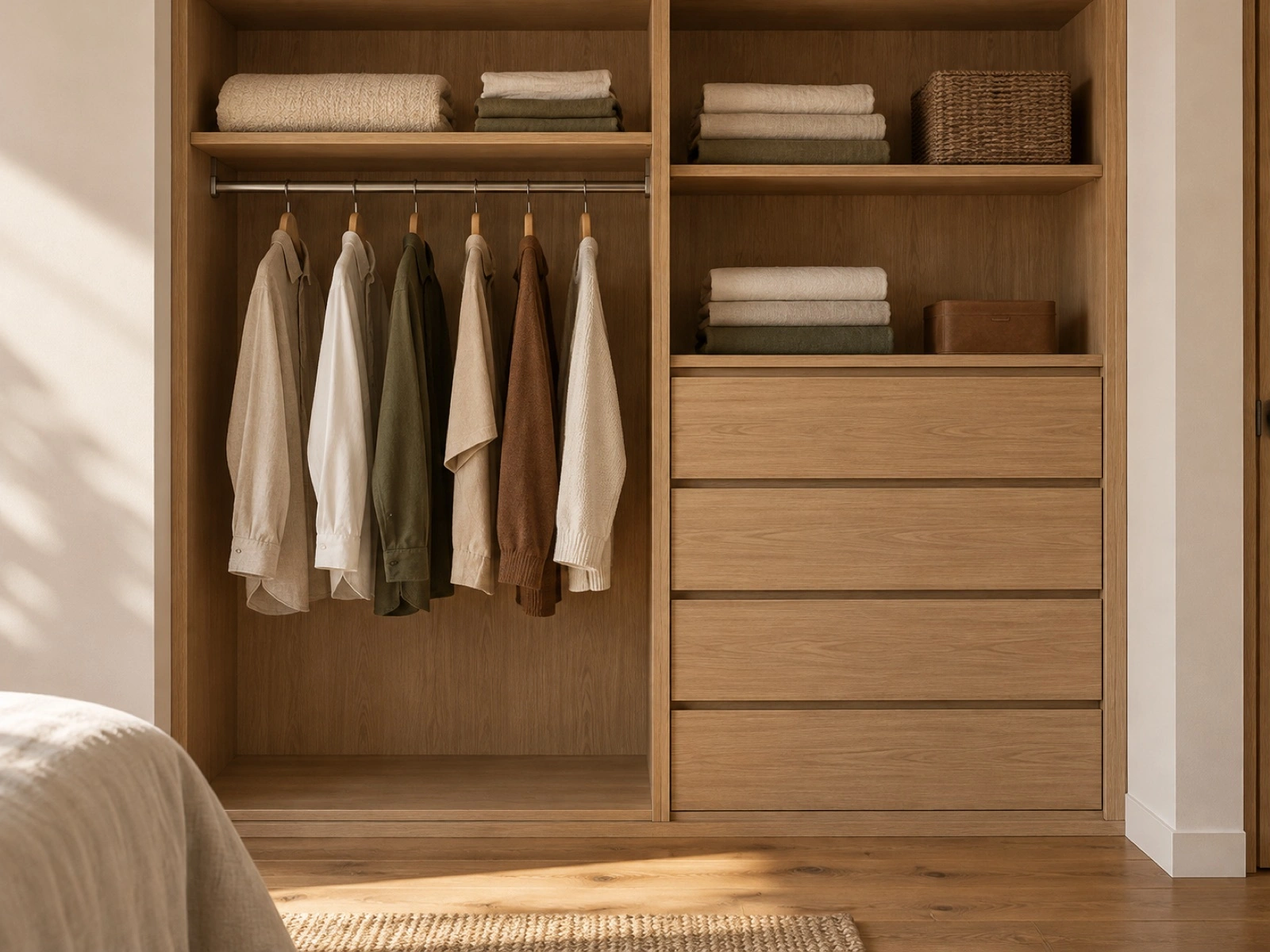
Most people start a wardrobe or a wall of storage by picking a look: open shelves, a bank of drawers, a long rail. I ask a different question first. What will you put in it on an ordinary Tuesday? The answer decides the inside, and the inside decides how much the wall can hold.
Here is how I compare the three, using the same 2.4 m wall our storage planner starts with. Every figure is the space inside the cabinets, not a promise about how many things fit.
Shelves hold the most length
A 2.4 m wall splits into four bays of about 553 mm each between the panels. Fill every bay with shelves and you get 16 adjustable shelves and about 8.8 m of shelf length, each shelf about 550 mm deep. That suits books, folded jumpers, boxes and anything you like to see at a glance.
Shelves are also the lightest on the budget. In our example, open shelves on that wall come to about A$4,100 to A$5,200 including GST, with making in 4 to 6 weeks after the drawings are approved.
Drawers trade length for reach
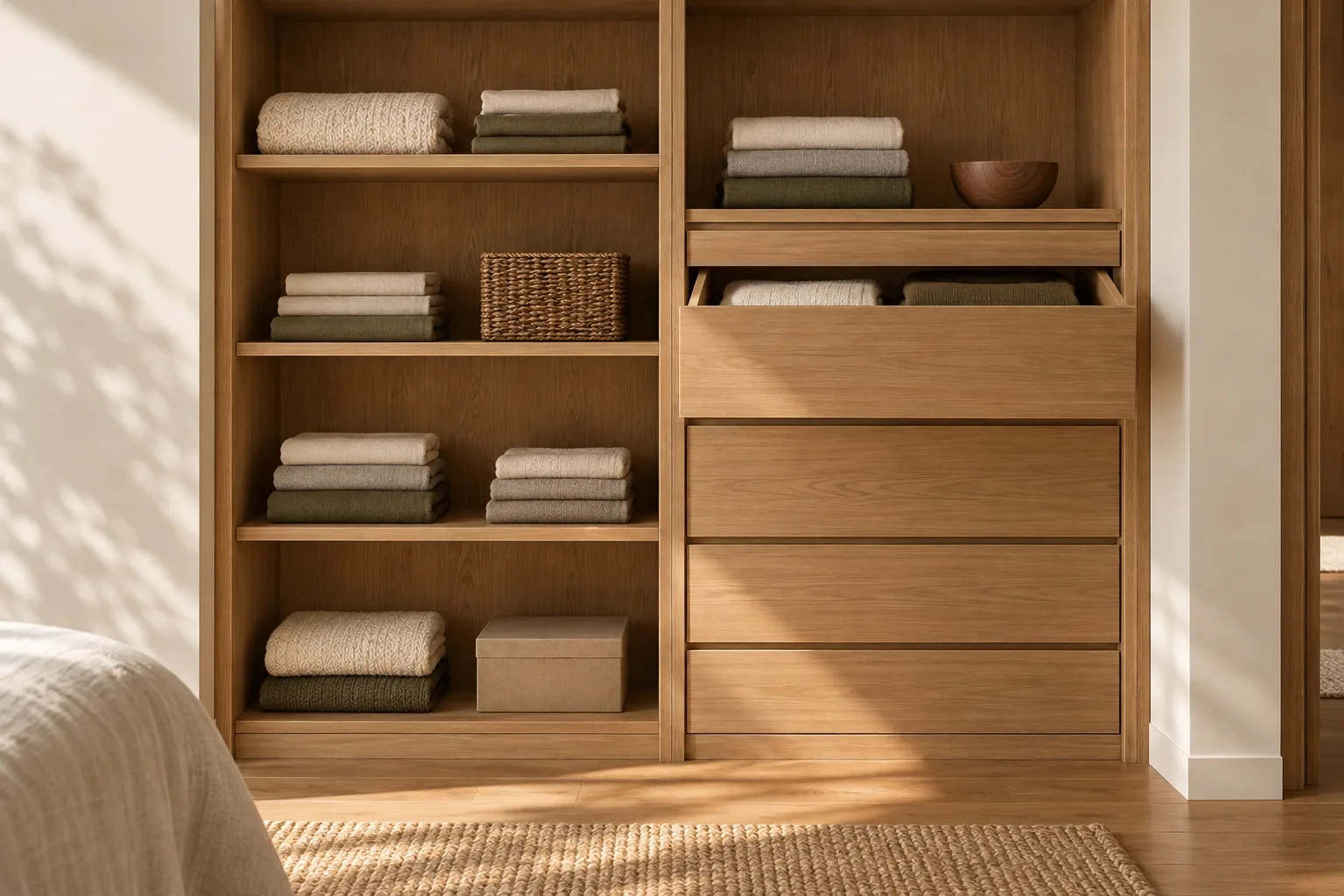
A drawer bay in our system has four drawers under two upper shelves. Small, loose things stop sliding to the back, and you can see the whole drawer when it is open. Make all four bays drawers and the wall holds 16 drawers, about 515 litres in total, plus eight shelves.
Drawers cost more to make, because each one has its own box and runners. The same wall in drawers is about A$6,700 to A$8,400, and making takes about a week longer. Most rooms only need one drawer bay, placed where you dress.
Hanging needs drop, not width
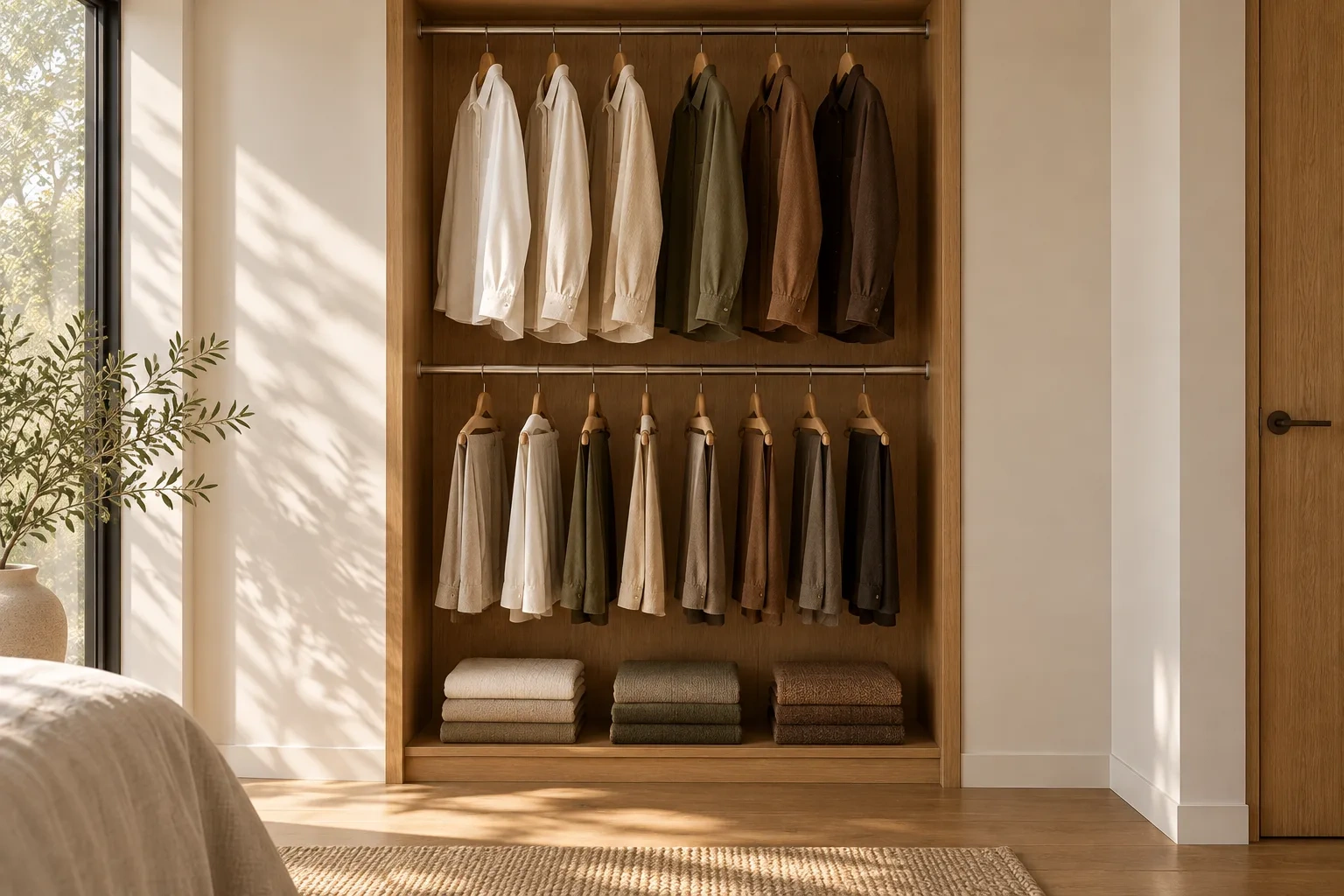
A hanging bay has one rail under an upper shelf. Four hanging bays give about 2.2 m of rail. Before you choose, measure the longest coat or dress you own: long garments need the full drop below the rail, and shirts can share a bay with a second, lower rail in a custom design.
A mix is usually the answer
Our mixed wardrobe puts half the bays to hanging, then one bay of drawers, then shelves. On 2.4 m that is two hanging bays, one drawer bay and one shelf bay: 8 shelves, 4 drawers of about 129 litres and about 1.1 m of rail. Add hinged fronts and the example comes to about A$5,900 to A$7,500.
If your mix is different, write it in your brief. The planner only shows that one fixed arrangement, and that is on purpose: the final layout comes from your room, your things and a measure-up, not from a slider.
Before you write the brief
Group what you own into four piles in your head: things you fold, things you hang, small things, and things you rarely touch. Note the longest item you hang and anything heavy, like a record collection. That list, a rough wall width and the room it goes in are enough for us to start.
Tell us what the room needs to do.
We review every brief and reply about a measure-up. A request books nothing and costs nothing.